
Leadership professionals have long wrestled with the relationship between authority and impact. Traditional organizational structures equate leadership with position — title, rank, reporting lines, formal scope of responsibility. Yet history and experience suggest that position alone does not guarantee meaningful influence. Indeed, some of the most consequential leaders in institutional, civic, and religious life have operated without formal authority, while others occupying impressive offices have exercised surprisingly little real sway.
The mature leader eventually confronts a subtle but consequential choice: in pivotal moments, should one prioritize position or influence? This is not a simplistic either/or decision between career advancement and public voice. Rather, it is a nuanced pattern — a recognition that influence, when stewarded wisely, often outlives and outperforms positional authority.
Position: The Architecture of Formal Authority
Position provides structure. It clarifies accountability, delineates decision rights, and establishes chains of command. Without positional leadership, institutions collapse into ambiguity. Formal authority is therefore neither trivial nor corrupting by default; it is essential to organized human endeavor.
A manager overseeing ten frontline employees carries real responsibility. Compensation, scheduling, evaluation, morale — these are not abstract concerns. Position provides leverage to allocate resources and make binding decisions. It enables action.
However, position has limitations. Authority compels compliance, but it does not guarantee commitment. A supervisor may enforce policy yet fail to inspire discretionary effort. A title can secure obedience without earning trust.
Furthermore, positional leadership is often narrow in scope. A “lofty” title within a confined domain may affect a small circle of direct reports, while broader cultural narratives unfold beyond that perimeter. In this sense, position is a structural tool — necessary but insufficient for enduring impact.
Influence: The Currency of Enduring Leadership
Influence operates differently. It is relational rather than hierarchical. It flows through credibility, consistency, and character. Influence cannot be assigned; it must be earned.
In contemporary leadership theory, influence aligns closely with concepts such as “informal leadership,” “thought leadership,” and “cultural leadership.” These forms of leadership transcend reporting structures. They shape how people think, not merely what they do.
A leader who speaks to thousands through published media may not control their actions yet may shape their frameworks of understanding. A mentor with no managerial authority may alter the trajectory of a young professional’s career more profoundly than any supervisor. A respected peer may sway strategic decisions simply because others trust his or her judgment.
Influence is voluntary. People follow because they want to, not because they must. And voluntary followership is the foundation of durable leadership.
The False Dichotomy
It would be a mistake to present position and influence as mutually exclusive. Many effective leaders hold both. Indeed, the most powerful leadership occurs when formal authority and moral influence align.
The nuance lies in recognizing that there are moments in a career — and in life — when influence may matter more than title.
A professional offered a management role overseeing a small team may find that the role limits the time and energy available for broader strategic thinking, publishing, or mentoring. Conversely, an opportunity to speak, write, or shape conversation beyond one’s immediate department may yield influence disproportionate to formal rank.
The decision is not about ambition versus humility. It is about scope of impact. The wise leader asks: Where can I add the most enduring value?
Scale and Depth of Impact
Positional leadership typically offers depth within a defined unit. One can deeply shape the development of a handful of individuals. This is not insignificant. Transforming ten frontline workers through principled leadership may ripple outward through their families, communities, and future workplaces.
Influence-oriented leadership often offers scale. Through public speaking, published work, or cultural commentary, a leader may reach hundreds or thousands. The impact may be less direct but more expansive.
The distinction between scale and depth is critical. A leader obsessed with scale may neglect relational depth. A leader focused solely on depth may miss opportunities for broader contribution.
The nuanced principle, therefore, is not “choose influence over position,” but “discern which form of leadership impact is most consequential in a given season.”
Authority Without Influence: A Fragile Model
History provides abundant examples of leaders who possessed unquestioned positional authority yet lacked authentic influence. Their directives were followed while their tenure lasted, but their legacy dissolved quickly once the office was vacated.
Authority without influence is inherently fragile. It depends on structural enforcement. When the structure changes, so does the leader’s impact.
By contrast, influence often persists beyond tenure. Perhaps you can remember that favorite teacher who leveraged their position of trust and influenced your life in a broad manner. Or you might recall a wonderful mentor whose counsel still guides your professional habits. And what about those writers whose ideas continue to circulate? These leaders exercise post-positional power.
Enduring leadership is less about control and more about imprint, a legacy that perpetuates through generations.
Influence as Moral Capital
Influence accumulates like capital. It grows through consistent behavior aligned with articulated values. It is strengthened through humility, fairness, and steadiness under pressure. Importantly, influence cannot be demanded. It is conferred by others.
This reality introduces a moral dimension to leadership. Positional authority can be granted through appointment. Influence requires trust. Trust requires integrity.
Thus, choosing influence over position in certain moments may reflect a deeper commitment to moral authority rather than organizational rank.
The Long Horizon Perspective
Leaders operating with a long time horizon — particularly those approaching the later stages of their careers — often reevaluate the meaning of impact. Early-career professionals may rightly pursue positional advancement to gain experience, resources, and credibility. As careers mature, the calculus shifts.
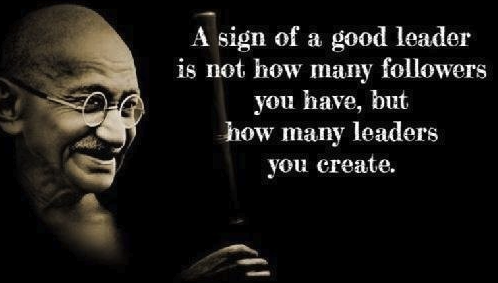
Questions become less about title and more about legacy:
- Who did I develop?
- What ideas did I shape?
- What tone did I set?
- Did I stabilize or inflame?
Influence-based leadership often answers these questions more directly than positional metrics. A supervisor may be remembered for policy enforcement. A mentor may be remembered for courage instilled.
When Position Matters Most
There are also moments when position is indispensable. Crisis leadership often requires formal authority to coordinate response. Institutional reform may require someone in office willing to make structural change. In such moments, declining position in favor of influence would be abdication.
The nuanced principle, therefore, demands discernment rather than dogma. Leaders must evaluate context: Is this a season requiring structural authority? Or a season requiring moral persuasion?
Integrative Leadership: Holding Both
The most sophisticated leadership pattern integrates position and influence. A leader who holds title but prioritizes relational credibility will wield authority more effectively. A thought leader who eventually steps into formal office brings moral capital with them.
Rather than chasing title for its own sake, the integrative leader cultivates influence continuously — through consistent behavior, intellectual rigor, and humane treatment of others — so that if position comes, it rests upon a stable foundation. In this sense, influence is primary; position is instrumental.
Conclusion: The Quiet Weight of Influence
The proposition that great leaders choose influence over position is not a rejection of hierarchy or ambition. It is an acknowledgment that leadership is ultimately measured by impact, not rank.
Perhaps we could break it down this way: position organizes; influence transforms. And in this context, I suggest that titles expire, but character defined by influence echoes throughout the eternities.
The leader who understands this nuance will not disdain formal authority, nor will he or she idolize it. Instead, such a leader will ask, repeatedly and honestly: Where does my presence generate the greatest constructive effect on people – not just my subordinates, but all people within my influence?
Admittedly on a day-to-day regimen, in some seasons, we will find the answer to be a defined managerial role shaping a small team. In others, it will be a broader platform shaping conversation, culture, or conscience.
Great leadership is not an either/or career strategy. It is a calibrated discernment — a willingness to rise to enduring influence when it matters most, while stewarding position responsibly when it is entrusted.
In the final analysis, influence is the quieter power. It requires patience, credibility, and restraint. Yet it is often the form of leadership that remains when titles fade and organizational charts are redrawn.
And it is in that enduring residue — the ideas planted into the infrastructure, the people’s professional resolve strengthened, the tone set — that the true measure of leadership is found.
 KIP OCASEK
Leave a comment