I wrote this essay about a decade ago. Like so many refugee stories, this particular story has aged well. The names and geography changes, but the events are devastatingly similar. According to current estimates, 122 million people throughout the world are considered displaced or refugees.
‘If we are to have peace on earth…our loyalties must transcend our race, our tribe, our class, and our nation; this means we must develop a world perspective.’ Martin Luther King Jr.
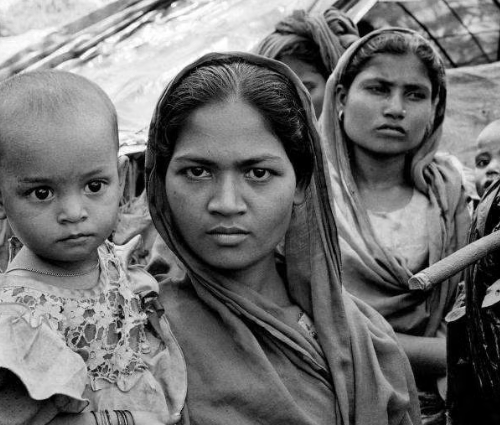
Rajuma is a petite woman who looks young for her age. She lived in the village of Tula Toli, a small farming hamlet located in Rakhine state in western Myanmar. The day the government soldiers came to her village in late 2017 was the beginning of Rajuma’s living nightmare. That day, she joined the ranks as a Rohingya refugee. This is her story.
The soldiers from the government of Myanmar were ordered to respond to Rohingya villages in Rakhine on what they called, ‘clearance operations.’ They were responding to the report of an attack by Rohingya militants and were supposed to be targeting only the insurgents. But according to eye-witnesses, almost all those killed by the government soldiers were unarmed villagers, many who had their hands bound when they were murdered.
With her village burning, Rajuma stood in chest-deep water clinging tightly to her 18- month-old baby. When the attack started, she was quickly captured and taken to a nearby riverbank along with other villagers. The men of the village were separated from their wives and children and killed by the soldiers. The women and children were sent into the water and told to wait. Rajuma did exactly as she was told.
The next few moments would change Rajuma’s life forever. The soldiers were randomly raping and killing the people of her village. She, her baby, and her husband became victims to the attack. Rajuma was raped, and her baby and husband were both killed by the soldiers.
After hiding in a grove of trees throughout the night, Rajuma found a T-shirt to cover her body and then ran until she caught up with other villagers searching for a new place that would be safe from violence, hatred, and death. Rajuma’s life as a Rohingya refugee had begun.
It’s arguably impossible to fully understand the scope of daily misery refugees, such as Rajuma, recognize as reality. Being driven from their homes, living in squalid tent cities, dealing with uncertainty, being hungry and thirsty, and watching their children suffering and dying are arguably inadequate descriptions, which depict the harsh realities defining the day-to-day living of these outcasts.
Rajuma’s people, an ethnic group known as the Rohingya, are mostly Muslims that have lived for centuries in Myanmar–a country populated primarily by Buddhists. The Rohingya speak their own language, a dialect distinct from the other languages spoken in Myanmar. Before being driven out, most of the Rohingya population lived in the western border regions of Myanmar in the state of Rakhine. Most of the Rohingya communities in Rakhine are marked by poverty and are lacking basic services and opportunities. Many of those communities, like Rajuma’s, were burned by the government soldiers during clearance operations.
According to statistics from the U.N. Refugee Agency, there are approximately 1 million Rohingya refugees alive today, spread throughout various countries in Asia. Just since 2012, nearly 200,000 Rohingya have fled Myanmar. Of the 1 million, approximately 112,000 Rohingya made their way across the Bay of Bengal and the Andaman sea to find refuge in Malaysia. Bangladesh took in around 500,000, and the rest are scattered between other countries such as Pakistan, India, and Indonesia.
Human rights investigators claim that the week or so during which Rajuma’s village was destroyed and its inhabitants raped and murdered, was the time of gravest atrocities they have documented. Witnesses described government troops killing anyone they could get their hands on.
Rajuma eventually made it to a sprawling refugee camp in Bangladesh, up the Bay of Bengal from Myanmar. She managed to arrive there after escaping her country on a small wooden boat. She owned nothing but the T- shirt worn when she escaped. She has no documentation that confirms her identity or from whence she came. Myanmar’s government claimed that Rohingya refugees may be welcomed back but only if they can prove through documentation that they came from Rakhine.
Rajuma’s camp is full of refugees who experienced atrocities similar to hers. Interviewers report that many refugees in Rajuma’s camp appear stoic in their attitudes and demeanors – appearing to be traumatized past the ability to feel. In dozens of interviews with survivors who had close family and friends killed in front of them, not a single tear was shed. But that wasn’t the case with Rajuma. After she reached the end of her testimony, she broke down. ‘I can’t explain how hard it hurts,’ she said, ‘to hear my son no longer call me ma.’
 KIP OCASEK
Leave a comment